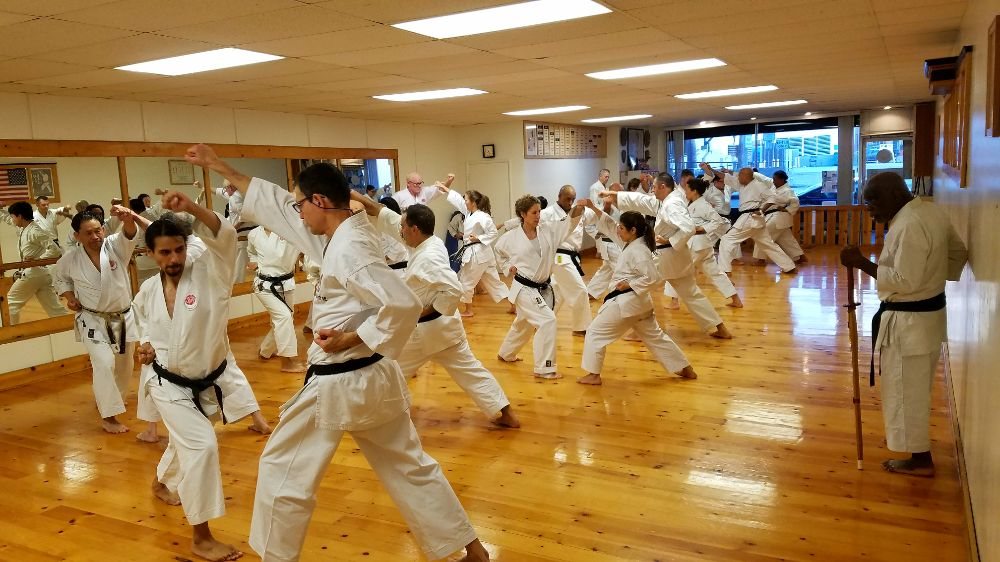
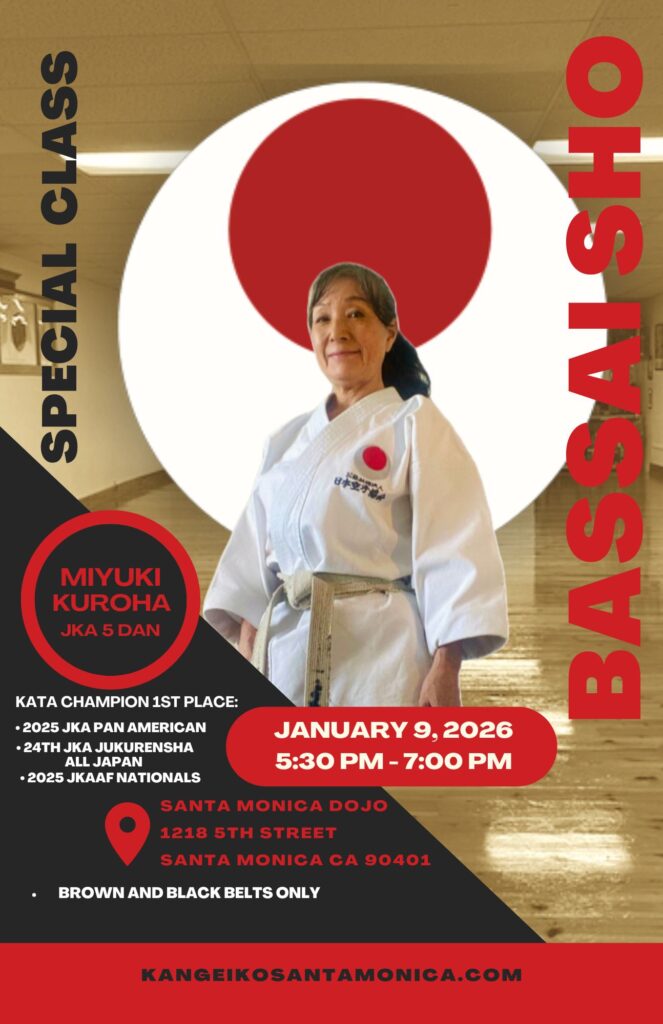
Kangeiko week is also an opportunity to reconsider the guiding principles of Shotokan dojos around the world, the Shotokan dōjō kun (道場訓).
These five principles frame the practice of Shotokan karate within an ethical context.
The five rules are:
一、人格完成に努むることhitotsu, jinkaku kansei ni tsutomuru kotojinkaku = personality, kansei = complete (perfect), ni = to, tsutomuru = endeavour
一、誠の道を守ることhitotsu, makoto no michi wo mamoru kotomakoto = truth, no = ‘s, michi = path, wo = with respect to that, mamoru = defend
一、努力の精神を養うことhitotsu, doryoku no seishin wo yashinau kotodoryoku = effort, no = ’s, seishin = spirit, wo = with respect to that, yashinau = cultivate一、礼儀を重んずることhitotsu, reigi wo omonzuru kotoreigi = courtesy, wo = with respect to that, omonzuru = honour
一、血気の勇を戒むることhitotsu, kekki no yū wo imashimuru kotokekki = vigor (impetuousness), no = of, yu = courage, wo = with respect to that, imashimuru = refrain
The word Hitotsu (一つ) means “one” or “first” and is prepended to each rule to place it at the same level of importance as the others. The word koto(こと) which ends each rule means “thing” and is used as a conjunction between rules. Also, the Japanese no indicates possessiveness and is equivalent to the English ‘s e.g. doryoku no seishin = effort’s spirit = the spirit of effort. wo (and wa) is used to indicate that the preceding element is the subject of the sentence e.g. X wo Y = with respect to X, Y. Finally, the word imashimuru seems archaic, however, it contains the radical 戒 that means admonition and is usually translated as refrain.
Interpretations
Varying translations and interpretations of the dōjō kun exist. Each translation differs in the terms used and the interpretations vary regarding the philosophical depth, meaning, and intention.
The population of English karate practitioners has pushed one form of the translation into being the most widely accepted outside Japan. Generally, the English translation states:
- Each person must strive for the completion and perfection of one’s character
- Each person must be faithful and protect the way of truth
- Each person must endeavor (fostering the spirit of effort)
- Each person must respect others and the rules of etiquette
- Each person must refrain from “hot blooded” behavior (guard against impetuous courage, intemperance, and excesses).
More terse translations are used in English-speaking member dojos of the ISKF, IKA and the Japan Karate Association (JKA):
- Strive for completion of character (or “Seek perfection of character”)
- Be Faithful
- Endeavor (to excel)
- Respect others
- Refrain from violent behavior
Santa Monica Dojo actively encourages all students to immerse themselves in the sincere study of the dōjō kun, and we expect that our conduct at the dojo is a reflection of it.
(Source: Wikipedia.org)